
One Magnetic Mallet Plus and two boxes with three kits: everything an implant practice needs for atraumatic extractions, drill-free implant site preparation and crestal sinus lift. No rotary burs.
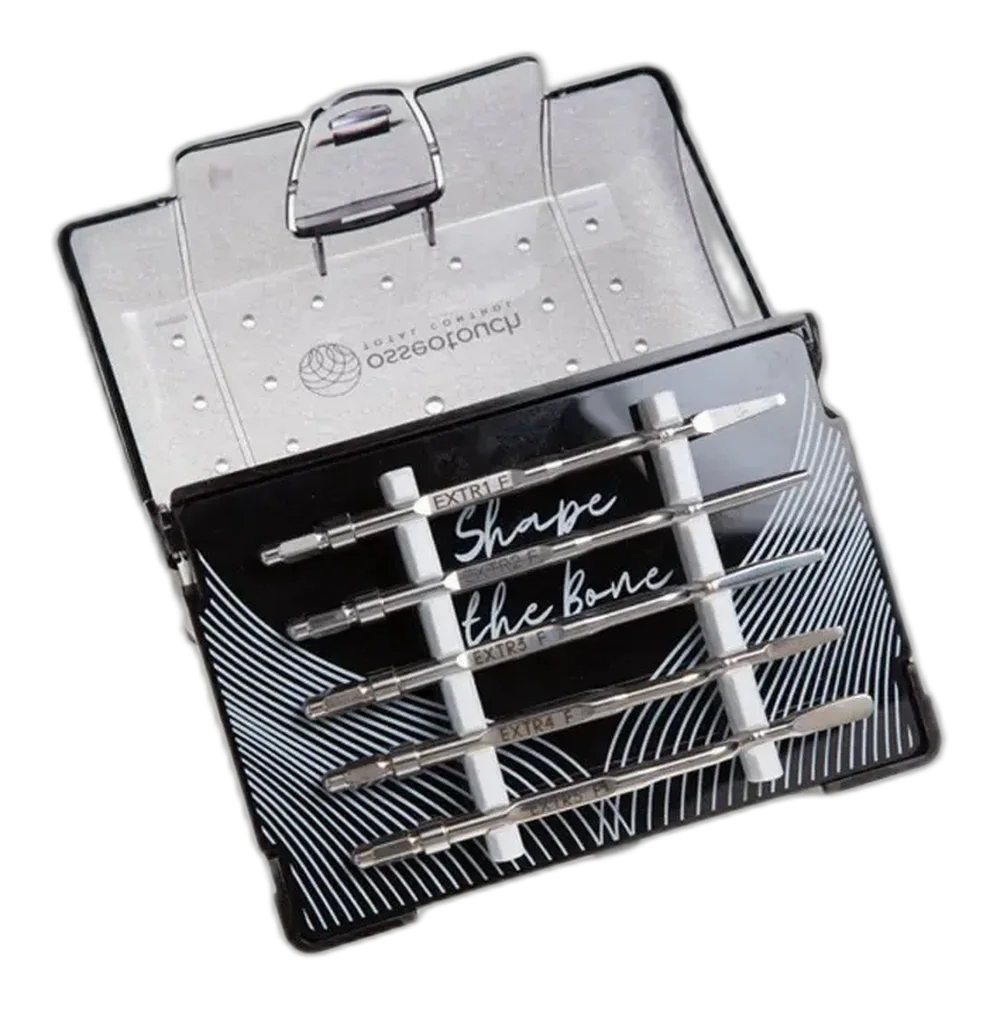 All-In boxEssential Extraction Kit · 4 extractors
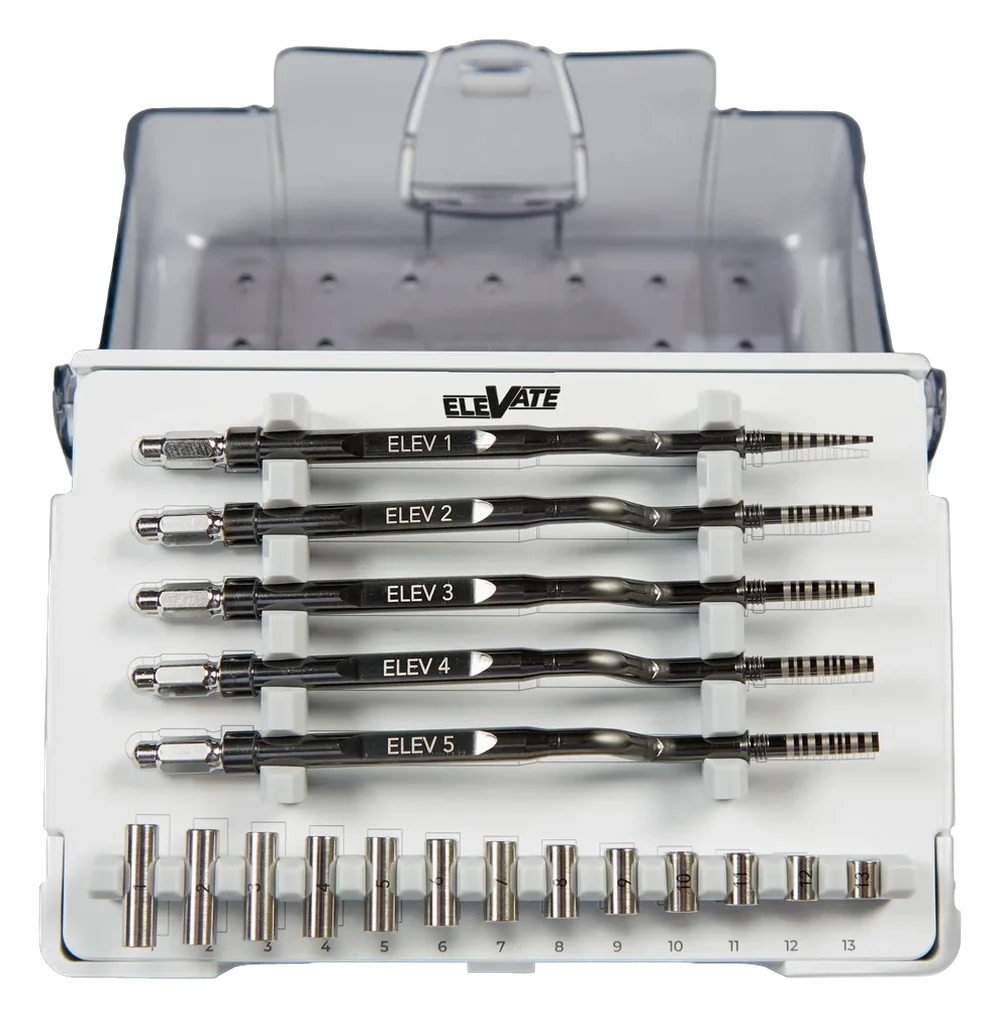 Elevate boxElevate Kit · 5 osteotomes
The Implant Geek configuration is a complete surgical set, not a starter pack. The Magnetic Mallet Plus drives every instrument; the three kits, delivered in two boxes, cover extraction, implant site preparation and sinus lift. Everything is autoclavable and reorderable instrument by instrument.
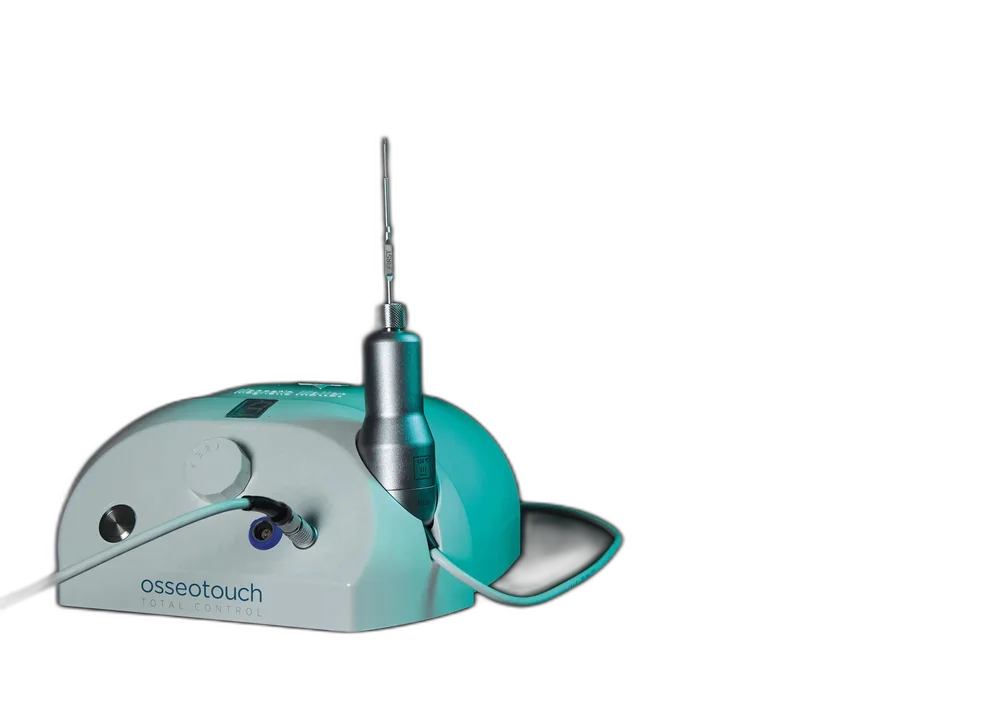
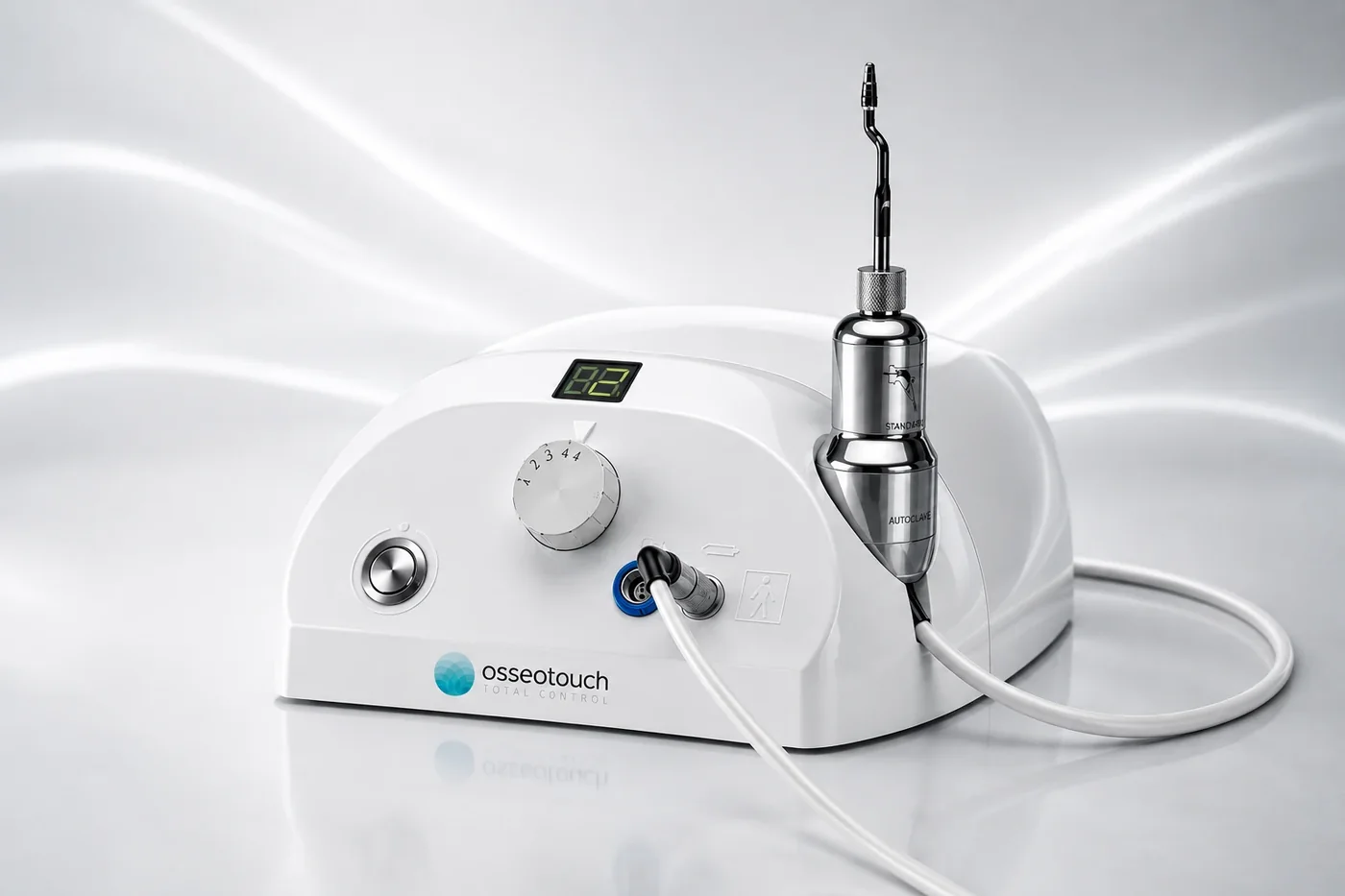
Control unit, handpiece and foot pedal. Four power levels, one impulse per pedal press, about 1 mm of advancement each time.
Box 1 · All-In · 10 instruments
Essential Extraction Kit — 4 extractors (1, 2, 3 reverse, 4) for atraumatic extractions that preserve the socket.
Silver Osteotome Kit — 6 osteotomes (100P to 360) for drill-free implant site preparation and freehand crestal sinus lift.
Both kits live together in one Radel All-In box.
Box 2 · Elevate · 5 instruments + 13 stops
Crestal sinus lift with millimetric depth stops: osteotomes Elevate 1 to 5 and numbered stops H1 to H13, in the Radel Elevate box.
| Magnetic Mallet Plus 110 V, handpiece and foot pedal | 1 unit |
| Box 1 · Radel All-In box — Essential Extraction Kit | 4 extractors |
| Box 1 · Radel All-In box — Silver Osteotome Kit | 6 osteotomes |
| Box 2 · Radel Elevate box — Elevate Kit | 5 osteotomes · 13 stops |
The Magnetic Mallet delivers a calibrated magnetic impulse to interchangeable instruments. Bone is displaced and condensed, not drilled away. The Implant Geek configuration covers the three procedures an implant practice performs most.
A controlled periotomy performed with MAGNETODYNAMICS: the impulse enters the periodontal ligament space with a progressive wedge effect and mobilizes the tooth without leverage on the alveolar bone. Socket walls are preserved for immediate implant placement or socket preservation.
Non-rotary osseodensification. The Silver osteotomes advance through cancellous bone by short axial impulses, condensing bone laterally along the planned trajectory. No rotation, no rotary friction heat, and the trajectory can be corrected mid-procedure.
With the Elevate kit the sinus floor is displaced through the crest with concave-tipped osteotomes and numbered depth stops that act as an impassable ceiling for the Schneiderian membrane. Dry field, no irrigation, autogenous bone carried apically.
The handpiece converts a magnetic impulse into a controlled axial force on the instrument tip. Each impulse, released by the foot pedal, advances the instrument by about one millimeter. The surgeon chooses direction, depth and power; the device delivers the force.
Magnetic Mallet Plus 110 V control unit with handpiece and foot pedal, plus the instruments below. Every instrument is autoclavable and reorderable individually; the extraction and Silver kits live together in the Radel All-In box.
Four extractors for anterior, posterior and multi-rooted teeth. The curved tips follow the root surface into the ligament space; the reverse extractor works the lingual and palatal aspects. Extractions take on average 3.5 minutes with 7 impulses at power level 2.
Six curved-handle osteotomes of progressive diameter, from 1.0 mm apical to 5.5 mm coronal, with depth notches at 7.0, 8.5, 10.0, 11.5, 13.0 and 15.0 mm. They prepare the implant site by condensation, and the apical ones (100P, 160, 200) can push bone toward the sinus floor for a freehand crestal lift.
Five concave-tipped osteotomes (tip 1.0 to 3.0 mm) and thirteen numbered depth stops from 1 to 13 mm that thread onto the collar. The stop limits penetration to the planned depth, the concave tip collects autogenous bone and carries it apically, and the whole procedure runs in a dry, visible field. Indicated from 2 to 7 mm of residual bone, with protocols for mini lift, single session and two-step cases.
The technique behind the Magnetic Mallet has been studied in peer-reviewed clinical and preclinical work. A few figures that matter in daily practice.
Alveolar bone loss at molars after Magnetic Mallet extraction, versus −44% with conventional technique.
Menchini-Fabris 2022Average extraction time, range 2 to 7 minutes, with no significant difference between surgeons.
Baldi 2024, 29 extractionsMean operative time versus 901 s with piezosurgery, with equivalent healing and pain outcomes.
Bennardo 2023, split-mouthCases of benign paroxysmal positional vertigo versus 7 with a manual mallet across 525 patients.
Bennardo 2022, systematic reviewFigures are taken from the cited publications as reported by the manufacturer. Several studies involved authors who collaborate with the manufacturer, and some endpoints are still under clinical confirmation. Full references and PDFs at osseotouch.com/en/papers.
The Implant Geek configuration is reserved for the attendees of New York Implant Institute courses. For availability, delivery and hands-on training, call the Institute.